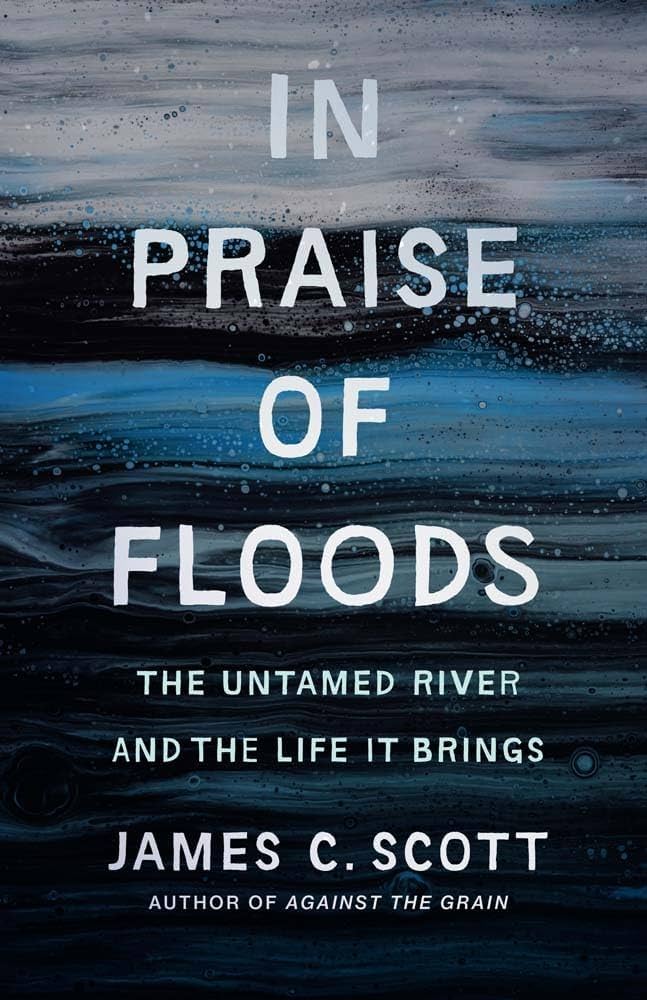
It’s extraordinarily pleasing to read field reporting from deeply embedded foreign correspondents, a vocation that is shamefully underfunded today given the myriad of crises engulfing the world. Even more scintillating is when those same correspondents transform their routine work into a synthesized volume, offering us both a panoramic view into another place that far exceeds the space of a clip and the measured restraint of judgment that comes from patience gained outside the news cycle.
Jonathan M. Katz was the AP news reporter for Hispaniola based out of Santo Domingo, Dominican Republic and ultimately moved to Haiti’s capital of Port-au-Prince full-time to report on the Western Hemisphere’s most immiserated country. It’s a tough assignment complete with roving gangs, random violence and regular power outages that makes the AP house-cum-office nestled next to one of the prestige expat hotels a mountaintop island of bare tranquility.
Haiti rarely makes headlines, and for a while, Katz’s clips rarely disseminated into the AP’s member publications. Having nearly completed his tour of duty, Katz begins preparations to depart for a new assignment, which his editor jokes will be a safer place like Kabul or Abuja, Nigeria. As he starts to prepare for the transfer, his tough assignment becomes even harder and yet more important when on January 12, 2010, a powerful earthquake rocked the nation, killing tens of thousands of Haitians in one of the worst natural disasters of the new millennium.
For the first half of the book, we follow Katz and his redoubtable and improvisational news assistant Evens as they drive all over Port-au-Prince in search of ground truth in the midst of extraordinary tragedy. Far from the gauzy memoirs that might be possible in such a work, Katz emphasizes
North Korea’s opacity is all but impregnable. Its neighbors, Russia and China, are dictatorships that work ever more diligently to control the speech of their citizens, but the two have got nothing on the Hermit Kingdom’s totalitarianism. Even the most rudimentary facts about what’s happening in the country are all but unknown to the outside world. In fact, the situation has gotten worse: the most valuable and reliable source of ground truth used to be defectors, but their numbers have slowed to a trickle ever since Covid-19 caused the country to tightly seal its border.
That totalitarianism has also meant complete narrative control of the country’s history and politics. No regime better stagecrafts its leaders and their biographies. That’s as true of Kim Jung-un today as it was for his grandfather and North Korea’s founder, Kim Il-sung. Unearthing what is fact and fiction is an extraordinarily challenging endeavor against a state that does everything in its power to disappear inconvenient facts (let alone people) and fervently broadcasts myths.
Fyodor Tertitskiy tries to cut through this morass in his compact biography of the elder Kim in Accidental Tyrant. This is an academic book published by Oxford, but it’s a largely readable account of Kim’s early years, his rise to power in the late 1940s, and the changing nature of his rule before his death in 1994. As the title implies, Tertitskiy’s argument is relatively benign: Kim’s success in founding and running North Korea was by no means a fait accompli. In fact, the Soviets had nearly complete control of the outcome, and Kim mostly survives due to their distractibility.
Compared to behemoth works where truth and fiction seem to flow together at times (I’m thinking in particular
I tend to read older cultural criticism with one of two minds. One is the delectable schadenfreude of witnessing previous moral panics that ultimately turn out to be hysterical outpourings of stupidity (I’m thinking of Dungeons and Dragons and how it will cause children to become Satan-worshippers). That haughty superiority of retrospect is only tempered by the nagging concern of identifying which of today’s moral panics are equally imbecilic (my vote is birth rates and natalism, but who knows).
Second is the value of just understanding an era’s concerns as a lens to understand its history. Reading contemporaneous opinions of, say, the Civil Rights movement can remind us of the stakes involved, the contingency of history, how different groups ultimately triumphed or failed, and how historians tends to burnish or punish the reputations of people in the long run.
Every once in a while though, you read a book of criticism that is both decades old and also feels like it could have been published yesterday.
Neil Postman wrote Amusing Ourselves to Death in 1985, and he was taking on the power of the boob tube (aka television) and its increasing dominance of American public life. This was the time of Ronald Reagan, a popular Hollywood actor, as well as televangelists like Jerry Falwell, but just a few years before CNN and the first Gulf War would truly transform the conduct of war and peace. It was a transitory moment for media, and Postman is writing a Buckley-esque (“standing ’athwart history, yelling Stop”) cri de coeur here against the video box in our living rooms.
What’s astonishing about Postman’s critique of television is that the trends he was observing have intensified a hundred-fold with the advent of social media. He criticizes the
I have to admit: I’ve had a really bad run of nonfiction books lately. All of them have been positively reviewed, some in terms that are magnificently glowing. Many of them have even won prestigious global awards. Time after time after all of the hubbub, I finally get around to making a purchase, bring a tome home, sit down in a comfortable chair, and steel myself for deep meditative attention on the text…
… only to find my disappointment inevitably arrives. Sometimes it’s after only a few pages when I can just tell that the author has all of the style of greige cement, or that the claims the book sets out are so bombastic or Manichaean that the rest of the book is guaranteed to be an intellectual slog. Oftentimes it’s not the intro but just the numbing page-after-page nightmare of a somnolent narrative that has nowhere to go. “Why isn’t this an article,” I’ll say —only to find out that it was. “Touché.”
So I’m a bit energized to report that Suzy Hansen’s From Life Itself doesn’t fall into the obvious traps of contemporary nonfiction. In fact, it’s one of the most rewarding works of reporting I have read in sometime.
We’re all aware of Turkey’s political changes over the past few decades under Erdoğan. But awareness is not understanding, and falls well short of wisdom. The Eurasia straddle power is probably the top five or ten most important country in the world right now to study, simply because it sits at so many global crossroads of politics, society, culture, religion and economics.
Hansen has done something extraordinary: she has reported on a country that is often synoptically airbrushed in news coverage and given it more
I find it fascinating that Wozniak is exclusively blurbed on the cover.
A decade ago in graduate school, I was part of a reading circle on the sociology of quantification. It’s a small lacuna of an academic field with a massive scope: the incredible quantification of society and the politics behind how people and institutions construct those numbers. It encompasses everything from censuses (why are certain racial groups counted and others have no box to tick?) and GPAs/SATs in education to developmental indicators from institutions like the World Bank (some of which were shut down due to massive scandals) and HR performance reviews in companies (“Needs Improvement”).
With 8.8 billion people on the planet, 340 million in America, and more than a million people working at the largest companies like Amazon, every organization eventually succumbs to both the allure and the need of the quantitative indicator. There are just too many people and too much corruption (ranging from garden-variety favoritism of one’s friends to outright financial bribery) for there not to be a near-objective metric for how to evaluate everything.
Once you start to see the impact of numbers on society, it’s almost impossible to stop seeing new examples. In that way, the field has a way of drawing you in, since it seems to be groping toward a fundamental theory of social life. In the end though, it’s disappointing because there appears to be no path out of the morass of metrics. What do you replace evaluations with? Gut instinct? Even the most fervent believer of qualitative assessments admits to the massive bias inherent in such a project.
I felt much of the elation and disappointment reading C. Thi Nguyen’s The Score. Nguyen is a philosopher of games, and he wants to interrogate what he seemingly sees as a contradiction: why are
2025 was a dizzying year. I can’t make heads or tails of it, the coin (almost certainly a Trump-faced 250th commemorative) just keeps spinning around on its edge like the inchoate end of Inception. What even happened? I consider my job as a writer to be a pretty simple one: to suck in the chaos of the world and offer each of my readers some sanity in return. Instead, the only sanity on offer is a zen-like acceptance of the chaos of the world, and a Serenity Prayer-esque koan that we should accept the world’s invariant chaos.
With that said, I feel like it was a fun year for imbibing chaos. Events around the world are the most substantial they have been in years. Old orthodoxies are being walked to the flames, even as new ideologies struggle to take root. AI is upending whole professions and industries, and the combination feels like a crucial turning point in history.
This year, I read 41 books, viewed 26 movies, watched 32 live Broadway and West End performances and read thousands of articles and essays. I do keep reasonable track of all of this, and so this is my selection of the best that I read and saw this year. I unfortunately didn’t finish a video game this year (open-world games take so long), and I only watched a single television show (White Lotus, Season 3).
Well, 2025 was a very quiet year. Minus, of course, the trillions of dollars in venture capital appreciation thanks to the AI boom and the insane pace of geopolitical news going on around the world. Who the hell am I kidding: I feel overwhelmed trying to encapsulate all that took place the past twelve months. So in lieu of a comprehensive summary that will take historians eons to work out, here are the highlights from Riskgaming, including my favorite posts, newsletters and scenarios we published this year.
For those counting, we published 104 newsletters, 47 podcasts and four new scenarios. We also hosted about 24 events including runthroughs of Riskgaming scenarios, community meetups and geopolitical dinners. In total, about 500 people got to join us live for an experience — definitely an upgrade thanks to Laurence Pevsner joining as my partner at the tail end of 2024.
As always, thanks for reading, listening and attending — your commitment has allowed Riskgaming to turn into a powerful institution for profound thought on some of the most complex issues facing the world today.
Highlights from 2025
We hosted 60 senior leaders from the United States and the United Kingdom for a biotech summit at the U.K.’s embassy in Washington DC as part of Prime Minister Keir Starmer’s trade mission to the United States.
I pissed off some Pennsylvania politicians with an op-ed in The New York Post on President Trump’s horrifying deal approving U.S. Steel’s acquisition by Nippon Steel.
2024 was the year of elections, with more than half of humanity voting (and Germany coming up in a few weeks and maybe Canada as well). So there was a little over-indexing on global politics than even I would normally read. Meanwhile, technology coverage has really hit a nadir. Thanks to awful media economics, our best writers have struggled to find long-term purchase in the industry, so quality has absolutely declined. Artificial intelligence, biotech, quantum computing and nuclear are extremely interesting areas, but coverage remains either superficial, ridiculously over-critical or just plain wrong. It’s really frustrating.
If there’s any pattern I have enjoyed this year (and in 2023), it’s simple stories that belie complex global narratives. Sometimes these essays can be overwrought, but it’s great to see writers tackling the complicated world we inhabit.
This year, I read 36 books and thousands of articles, watched 21 movies and 30 West End and Broadway shows, and played 3 video games, plus I listened to a smattering of live orchestra and opera. Below, the best of the sets.
This year, I’ve decided to bring together my favorite articles and books alongside other media into one look-back post. All of my previous posts from almost the last decade are available here.
The Best Books I Read
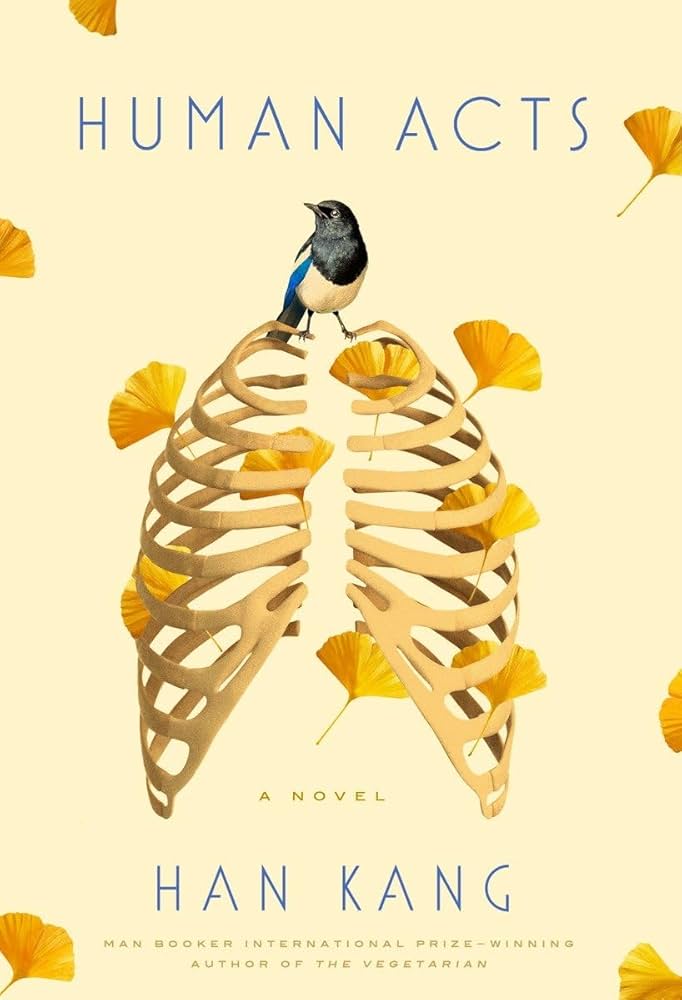
First Place: Human Acts by Han Kang
Han Kang won the Nobel Prize in Literature this year in a surprise victory over Haruki Murakami and a long list of other notables waiting for their turn to head to Sweden. I read Kang’s The Vegetarian years ago, and found it difficult and not all that engaging. Critically lauded, and one that I probably would appreciate on a re-read, but one of those “not for me”-type books.
Hi, I'm Danny. I'm Partner, Research at VC firm Lux Capital, where I publish the Securities newsletter and Riskgaming. I'm also a Fellow at the Manhattan Institute in New York.
Formerly, I was managing editor at TechCrunch and a venture capitalist at Charles River Ventures and General Catalyst.